American foulbrood (AFB) in Australia: notification, the ropy-string test, and why under-reporting hurts everyone
A beekeeper in the Hunter once told me he had pulled the entrance reducers off two hives that "did not seem right" and walked away from the apiary for a week to think. When he came back the bees from the strong neighbouring hives had robbed both of them out. He thought the dead-out was the end of the problem. What it actually was, almost certainly, was the start. American foulbrood spores live for over fifty years on contaminated equipment. The robbing bees took the spores home with them.
AFB (Paenibacillus larvae) is the most serious bacterial brood disease of European honey bees, and it is notifiable in every Australian state and territory. There is no over-the-counter cure, no shortcut. The legal answer everywhere in this country is the same: report it, and either burn or irradiate the affected gear. Hiding it is illegal, and it is also, practically, the most reliable way to spread it to the people next door.
What you are looking for
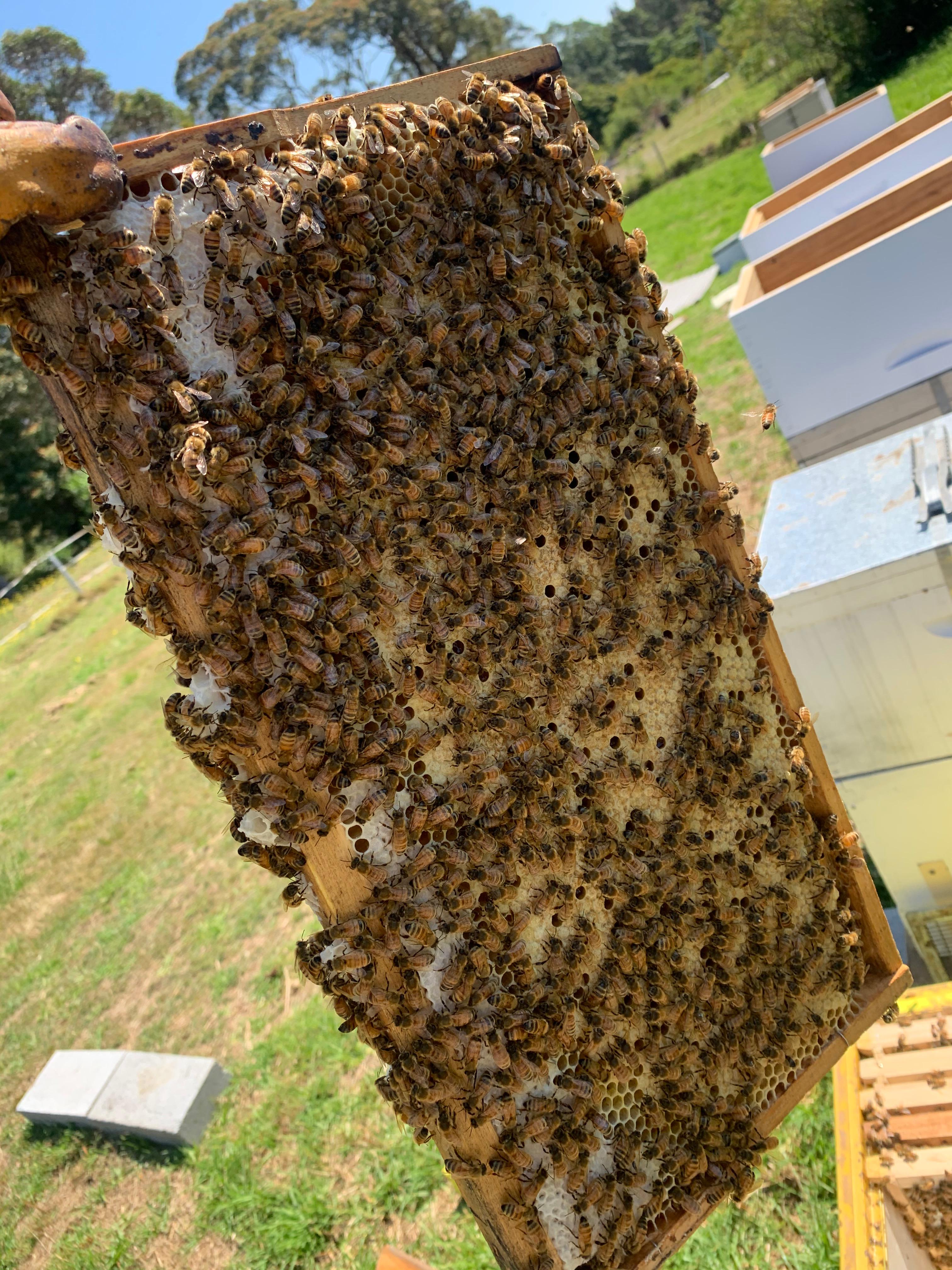
AFB does not announce itself. The early signs are subtle and easy to dismiss as "patchy brood" or "the queen is failing".
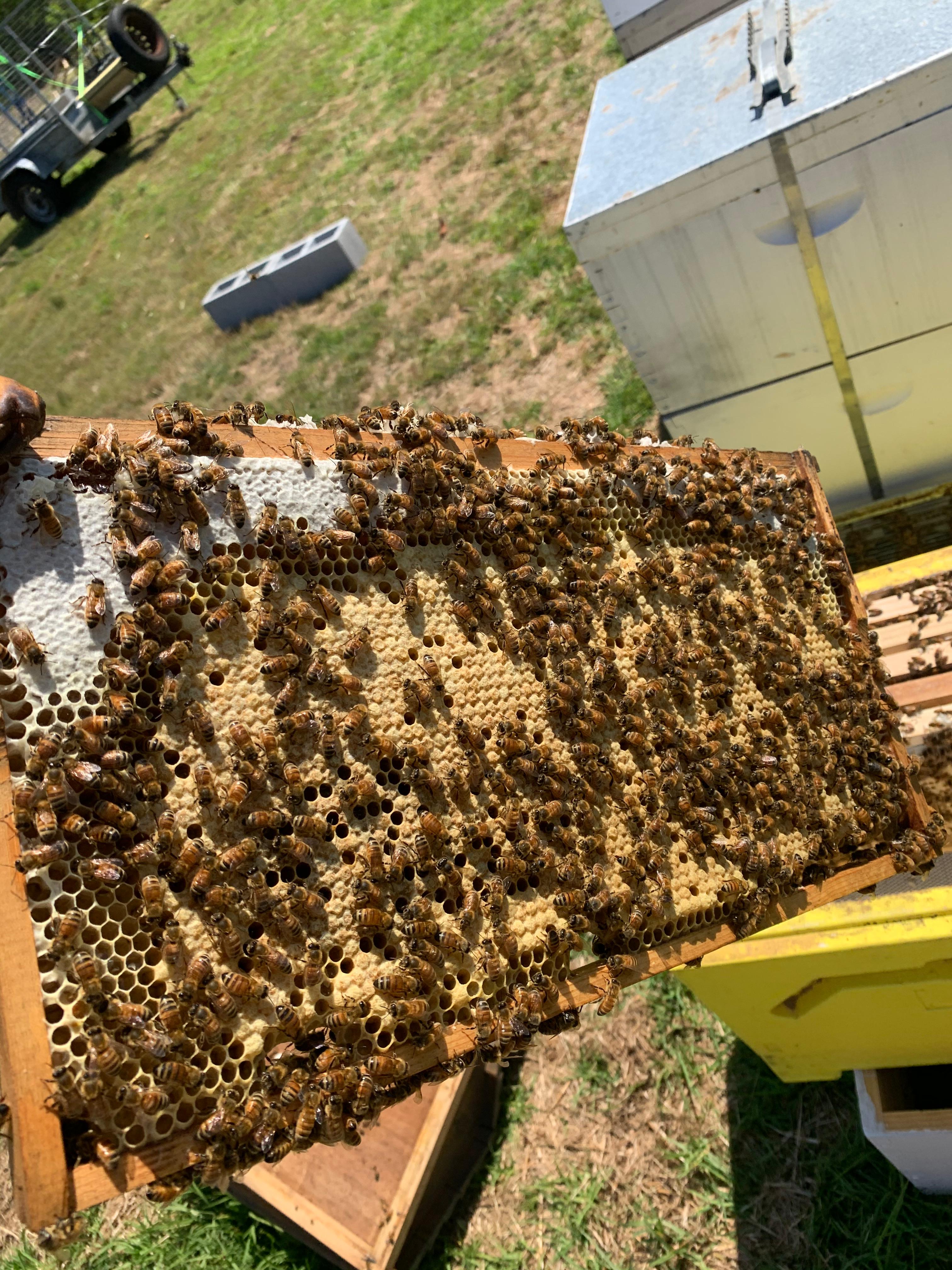
- A spotty brood pattern with capped cells scattered among empties.
- Sunken, perforated cappings. The cell wall over a sick larva collapses inward.
- Dark, moist or greasy capping colour rather than the dry biscuit-tan of healthy capped brood.
- A faint glue-pot or sour smell from the brood, distinct from the clean-bread smell of a healthy hive.
- Pupal tongues standing upright in the cell, the classic late-stage sign.
If you see two or more of these, do the ropy-string test before you do anything else.
The ropy-string test
The ropy-string test is the single fastest field diagnostic for AFB.
- Find a suspect cell with a sunken or perforated capping.
- Insert a thin twig, a matchstick or a bit of grass stem into the cell.
- Stir the contents and slowly withdraw.
- If the goo stretches into a stringy rope of 10 to 20 mm before snapping back, you have a textbook AFB positive.
European foulbrood (EFB), which is also notifiable, will not rope. EFB larvae go yellow and twisted but the contents stay watery. AFB ropes. Nothing else does.
The test is not legally definitive. A laboratory culture is. But it is good enough to stop, close the hive, and pick up the phone.
What to do the moment you suspect AFB
In order, no skipping steps:
- Close the hive. Do not leave it open while you think.
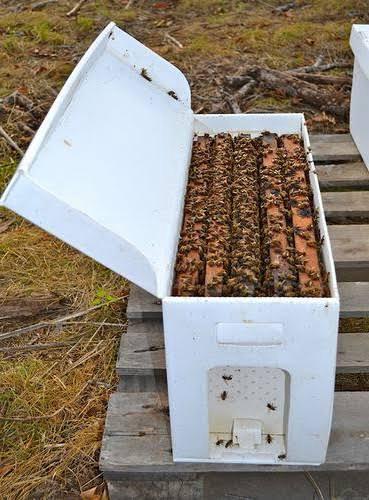
- Reduce the entrance to a single bee width to slow robbing.
- Do not move any equipment between hives. Not a hive tool. Not a frame. Not a smoker.
- Wash your hands and hive tool in a strong soap solution, ideally followed by a flame.
- Phone your state authority. The numbers below.
What happens next varies by state, but the common pattern is: an inspector visits, takes samples, the lab confirms, and the hive plus all its frames and combs is destroyed by burning or sent for gamma irradiation. Boxes and metalwork can usually be saved by irradiation. Wax and frames almost never can.
The reporting workflow, per state
Numbers and websites change. Confirm the current contact before you call. As of early 2026:
- NSW. Report through the Biosecurity Helpline on 1800 680 244 or via the NSW DPI online notification form. NSW DPI also runs the Biosecurity Information and Resource Tool for Hives (BIRTH) which is the registration system you should already be on.
- Victoria. Notify Agriculture Victoria via 136 186. AgVic has a dedicated AFB factsheet which is worth reading once a year.
- Queensland. Notify Biosecurity Queensland via 13 25 23 or the Biosecurity Queensland online form.
- Western Australia. Notify DPIRD on the Pest and Disease Information Service number, (08) 9368 3080.
- South Australia. Notify PIRSA via the Emergency Animal Disease Watch Hotline on 1800 675 888.
- Tasmania. Notify Biosecurity Tasmania via (03) 6165 3777.
- ACT. Notify Access Canberra; AFB is reportable under the ACT Animal Diseases Act.
- Northern Territory. Notify the NT Department of Industry, Tourism and Trade.
In every case, the call is free, and in every case the inspector is on your side. They are not there to fine you. They are there because the alternative, an unreported AFB case spreading through a region, costs everyone.
Why under-reporting is the real disaster
The argument against reporting is almost always financial. A confirmed AFB hive is a written-off hive. Compensation is patchy. Some states fund destruction; some do not. The temptation to "just burn it quietly" or to "treat" it with antibiotics and hope is real.
Two things to know.
- Antibiotics do not cure AFB. They suppress symptoms while the spores multiply. A hive "treated" with oxytetracycline will look healthy for a season and then erupt, often after the equipment has been moved or sold.
- One unreported case spreads. Robbing bees from neighbouring colonies will find a weakening AFB hive within days. Spores travel on bee bodies, on shared water sources, on second-hand equipment sold at swap meets. A single hidden case in a suburban backyard can reasonably contaminate a 5 km radius of hives within one season.
The numbers in NSW back this up. The years where AFB notifications dropped were not the years AFB was less common. They were the years more beekeepers stayed quiet. Notifications rebounded sharply when DPI ran its 2024 awareness campaign.
The biosecurity case for good records
If your state inspector asks for the source of a suspect hive's queen, where the boxes were last used, when you last extracted, and which apiary you took the bees from, you should be able to answer in under a minute. That is the practical case for digital record keeping. It is also the legal case. Under the Honey Bee Industry Biosecurity Code of Practice, you are expected to be able to demonstrate traceability.
A logbook, a spreadsheet, an app, a paper notebook with good handwriting. The format is not the point. The traceability is.
The habit to build
Inspect for AFB every time you do a brood inspection. Look at the cappings. Sniff the brood. Spend ten extra seconds on a frame that looks off. Carry a matchstick in your pocket so the ropy-string test is never more than one motion away.
And if you ever see the rope, hang up your tool, close the hive and make the call. The beekeepers within 5 km of you, who you have probably never met, will thank you for it. They just will not know they are thanking you.