Autumn management and robbing season in Australia: March to May
Autumn does not look like an emergency. The bees are still flying, the days are still warm in March, and the hives still feel heavy. That is the trap. The flow has stopped, the foragers are out of work, and the strong hives are eyeing the weak ones. The decisions you make in the next eight weeks set up which colonies see Christmas in July.
This is the autumn checklist I run, in the order I run it.
Identifying robbing before it kicks off
Robbing in Australian autumn is the single most preventable disaster. By April most flows have wound down, foragers are bored, and a weak hive with a poorly defended entrance becomes a buffet.
The signs are unmistakable once you know them:
- A cloud of bees fighting at the entrance, not the orderly traffic of foragers landing and taking off.
- Bees rolling on the landing board, locked together, sometimes falling to the ground.
- Wax cappings scattered on the landing board, where robbers have torn cells open to extract honey.
- A weak hive with no defenders and a sudden burst of "activity" that is actually robbers carrying out the loot.
- Robbers leaving heavy (slow, low flight, abdomen full) rather than light.
If you see this, act in the next ten minutes. Not later in the day.
- Reduce the entrance to a single bee width. A bit of grass jammed into the entrance works in an emergency.
- Cover the entrance with a wet sheet for an hour. The robbers cannot find their way in, the resident bees underneath stay calm.
- If it is severe, move the weak hive to a different apiary that night. Robbing is location-dependent. The robbers will come back tomorrow if you do not.
Reducing entrances, before you need to
Every hive in your apiary should have its entrance reduced from full width to about 75 mm by the end of March. Strong hives can defend a full entrance during a flow but not during a dearth. Reducing the entrance now is cheap insurance.
Use:
- A wooden entrance reducer with a 75 mm slot. A few dollars from any beekeeping supplier.
- A strip of foam cut to length and pushed into the entrance.
- A Robbing screen if you have a chronically weak hive that needs to keep flying. A robbing screen lets the resident bees orient back to the entrance via a side path; robbers cannot work it out and give up.
Reduce entrances on all hives, not just the weak ones. A robbing event starts with bees from your strong hives. Slow their return path home and they slow down on the attack.
Feeding for winter: the 2:1 syrup question
The autumn feeding question is different from the spring one. You are not stimulating brood. You are filling stores so the colony can survive a 2 to 4 month dearth.
When to feed in autumn:
- Heft the hive. Lift the back. If it lifts easily, it is light.
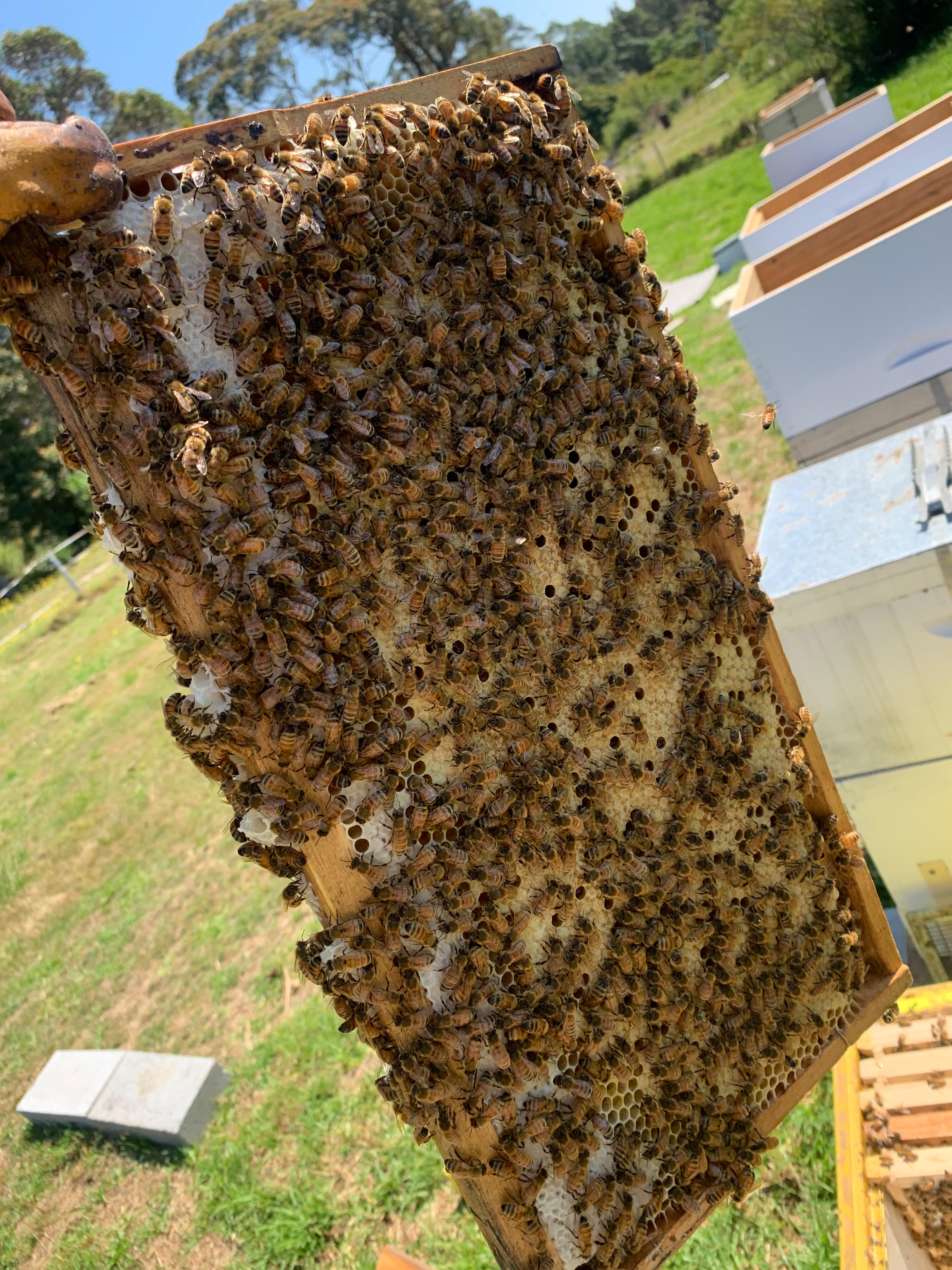
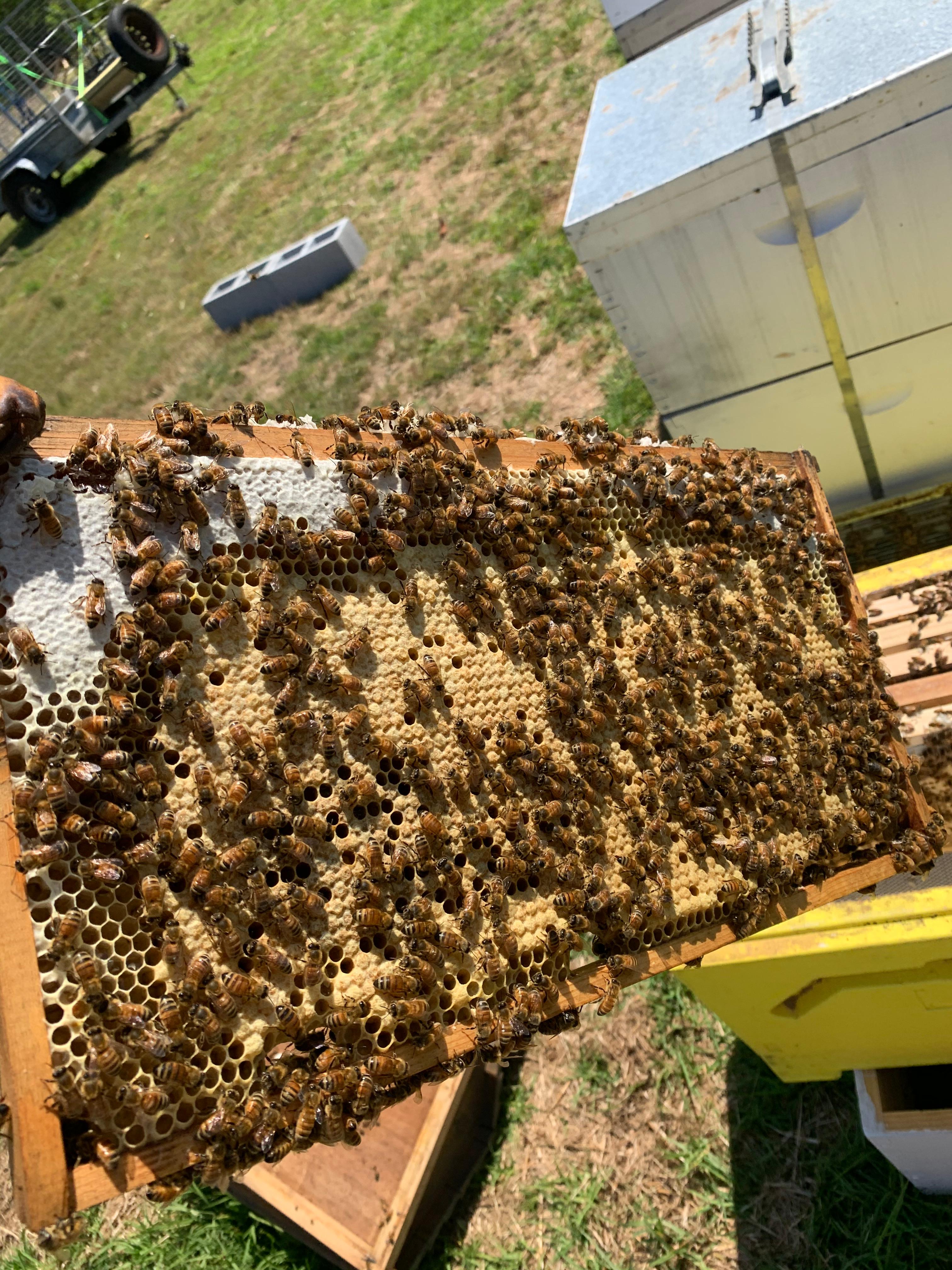
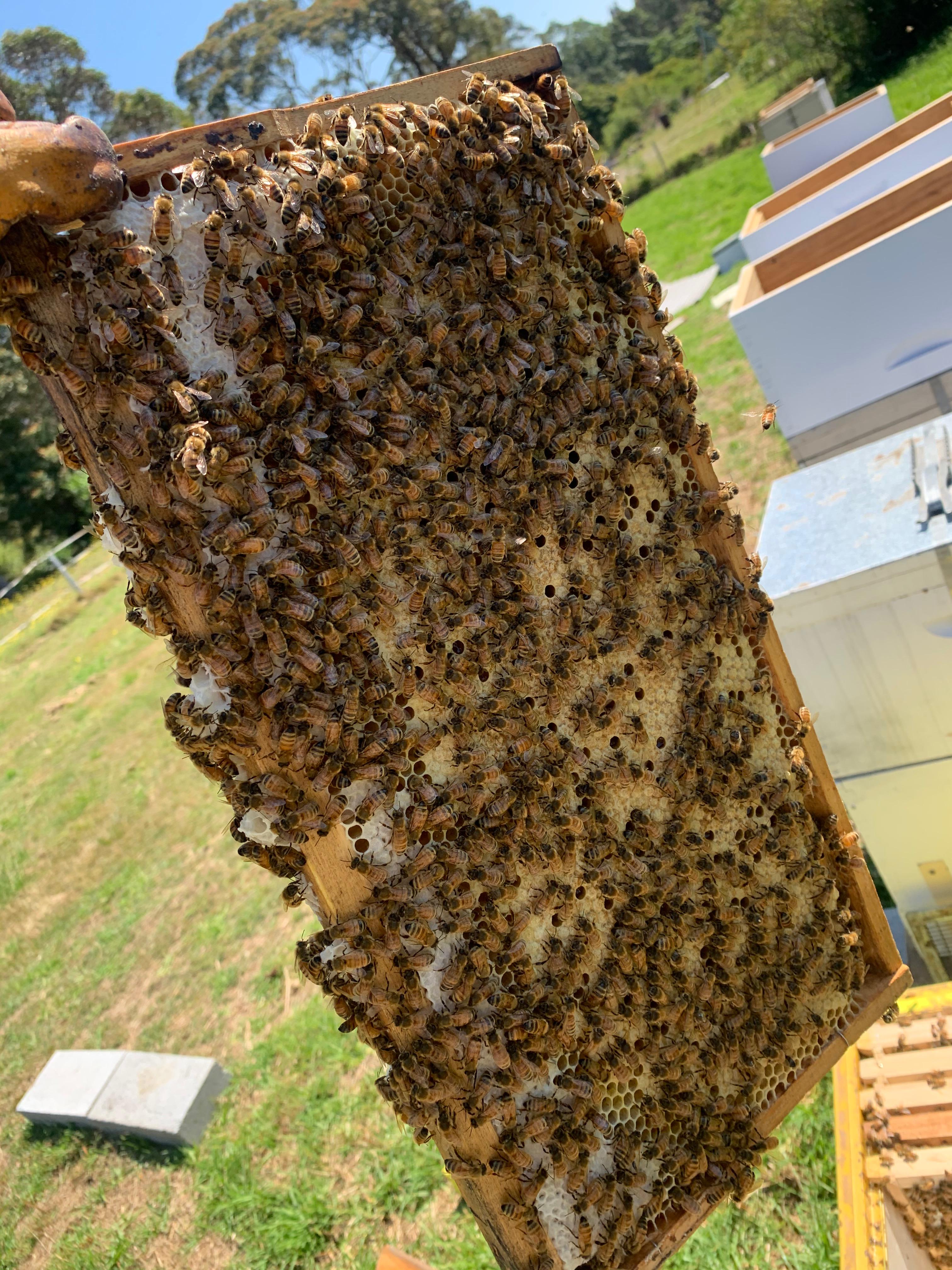
- Or count capped honey frames: you want at least four full frames of capped honey going into winter for an east-coast climate, six for cooler regions, two to three for sub-tropical Queensland.
- Light hive plus colony you want to keep = feed.
What to feed:
- 2:1 sugar syrup (2 kg sugar to 1 L water). Thicker than spring syrup. The bees evaporate less moisture before storing.
- Fondant (sugar paste) for very late feeding once nights are cold. Fondant goes on top of the cluster, between the inner cover and the top bar of the frames.
How much:
- A 4 L top feeder typically takes a hive from "light" to "winter ready" in two weeks of refills.
- Stop feeding when the bees stop taking it down. You cannot force-feed a colony that has decided it has enough.
Treatment timing: the autumn varroa window
This is the most important hive job of the year. Mite populations are at their seasonal peak in late summer and autumn. The bees raised right now (March-April) are the winter bees, the long-lived bees that have to last six months. If those bees are damaged by varroa as larvae, they die in June and the colony with them.
The autumn treatment window is March to early May in southern and eastern Australia. Treatment-specific notes:
- Oxalic acid vaporisation. Most effective when brood is reduced. A late autumn vapor when the queen has slowed laying gets enormous mite kill.
- Formic acid (Formic Pro). Penetrates capped brood, which is what you want when there is still brood present. Temperature sensitive. Below 10 degrees and it stops working; above 30 degrees and it damages the colony.
- Thymol (Apiguard). Slow but reliable. Six weeks of treatment is the standard, which means starting in early March if you want to be done by mid-April.
Whatever you use, read the label and respect the withdrawal period. If you treat with a honey super on, that super's honey is no longer for sale. Most autumn treatments happen with the supers off, which makes life simpler.
Merging weak hives
A weak colony in autumn is not going to recover by itself. The cold months ahead will finish it. The honest options are: merge it into a stronger colony, or accept the loss.
To merge two colonies:
- Newspaper merge. Take the queenless or weaker colony's brood box. Place it on top of the stronger colony, with a single sheet of newspaper between them. Slit the newspaper with a sharp blade in two or three places. The bees chew through over 24-48 hours and integrate slowly enough not to fight.
- Remove the weaker queen first if both colonies have queens. Two queens after a merge means a battle, and the result is unpredictable.
- Equalise frames a week later. Pull empty drawn comb to the outside, put brood frames in the centre, condense the colony into a single brood box if it fits.
A merged colony in March is much more useful than two weak colonies that both die in June.
What good autumn records look like
For each hive, by end of May:
- The mite count before and after autumn treatment.
- The treatment used and the application dates.
- The withdrawal-until date, written down so you do not accidentally extract too soon.
- The stores estimate (frames of capped honey) going into winter.
- The outcome of any merges: which queen survived, which colony absorbed which.
The hives that come through an Australian winter are not necessarily the strongest hives. They are the hives that went into autumn well-fed, treated for varroa at the right time, and protected from the robbers next door. Most of that is decided in March.