The sugar shake test, step by step, for Australian beekeepers
The first time I did a sugar shake I did three things wrong. I scooped from the wrong frame, I used too much sugar, and I shook too gently because I was worried about hurting the bees. The bees were fine. The result was useless.
A sugar shake is not difficult. It is, however, easy to do badly, and a badly done sugar shake gives you a comforting zero that is not the truth. This is the routine I use now, in the order I use it, with the small details that took me two seasons to get right.
The kit, before you walk to the hive
You want all of this assembled before you crack a lid. Once you are 300 bees deep into a jar, you do not want to be hunting for icing sugar.
- A clear wide-mouth jar of about 500 mL. A peanut butter jar works.
- A lid for the jar with the centre cut out, replaced with 8-mesh hardware cloth. Bigger mesh and bees escape, smaller mesh and the sugar will not fall through.
- A measuring cup that holds about half a cup of bees. Half a cup of compacted bees is roughly 300 bees. A standard 125 mL kitchen measuring cup is close enough.
- Pure icing sugar, no cornflour or anti-caking agents. Read the bag. The cheap stuff at the supermarket is usually pure. The fancy stuff often is not.
- A white plastic tray or shallow tub, ideally A4 size, so dropped mites are visible against a contrasting background.
- A water spray bottle.
- A pen and your inspection log. Mites you do not write down may as well not have been counted.
Pick the right frame
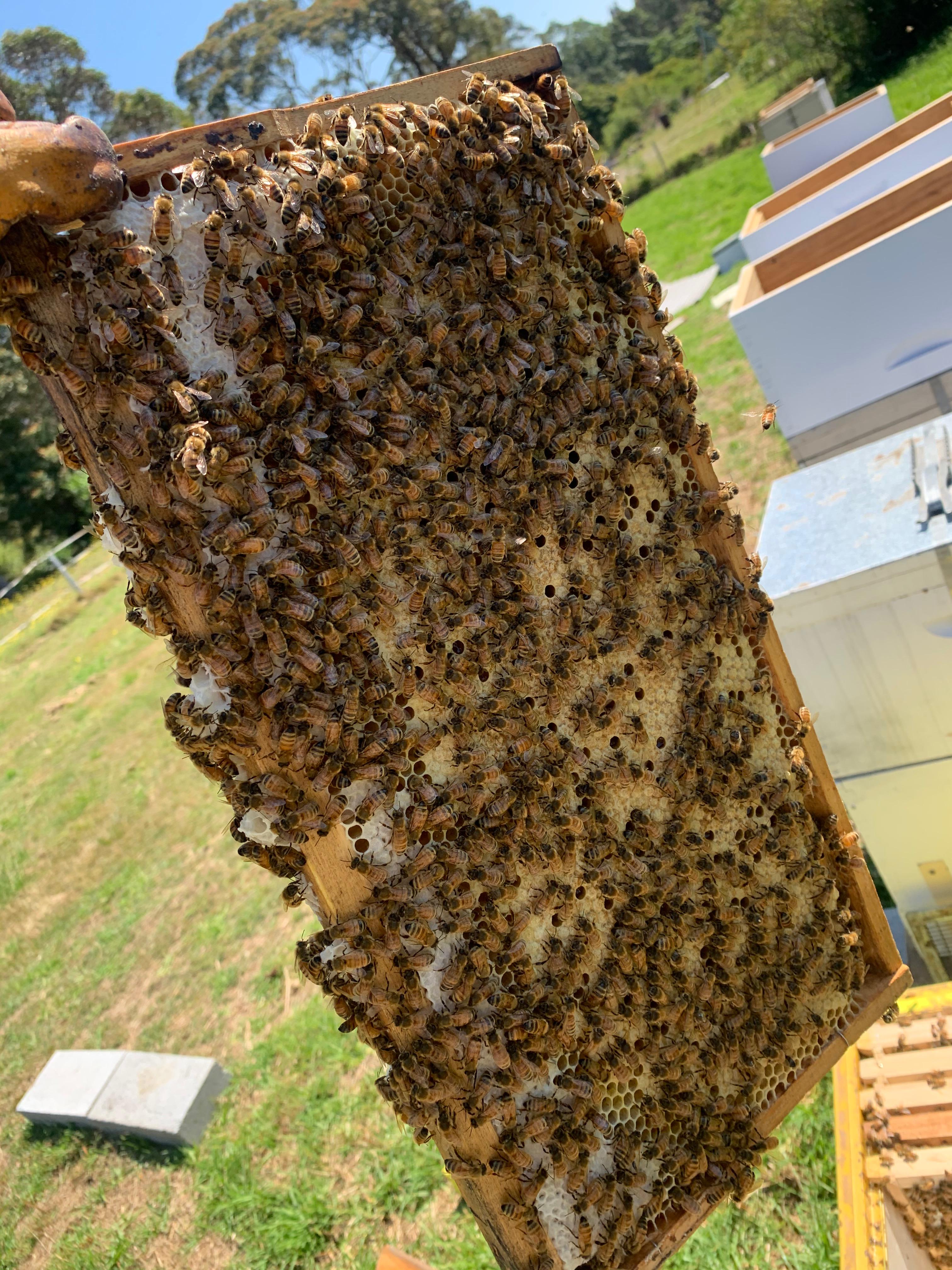
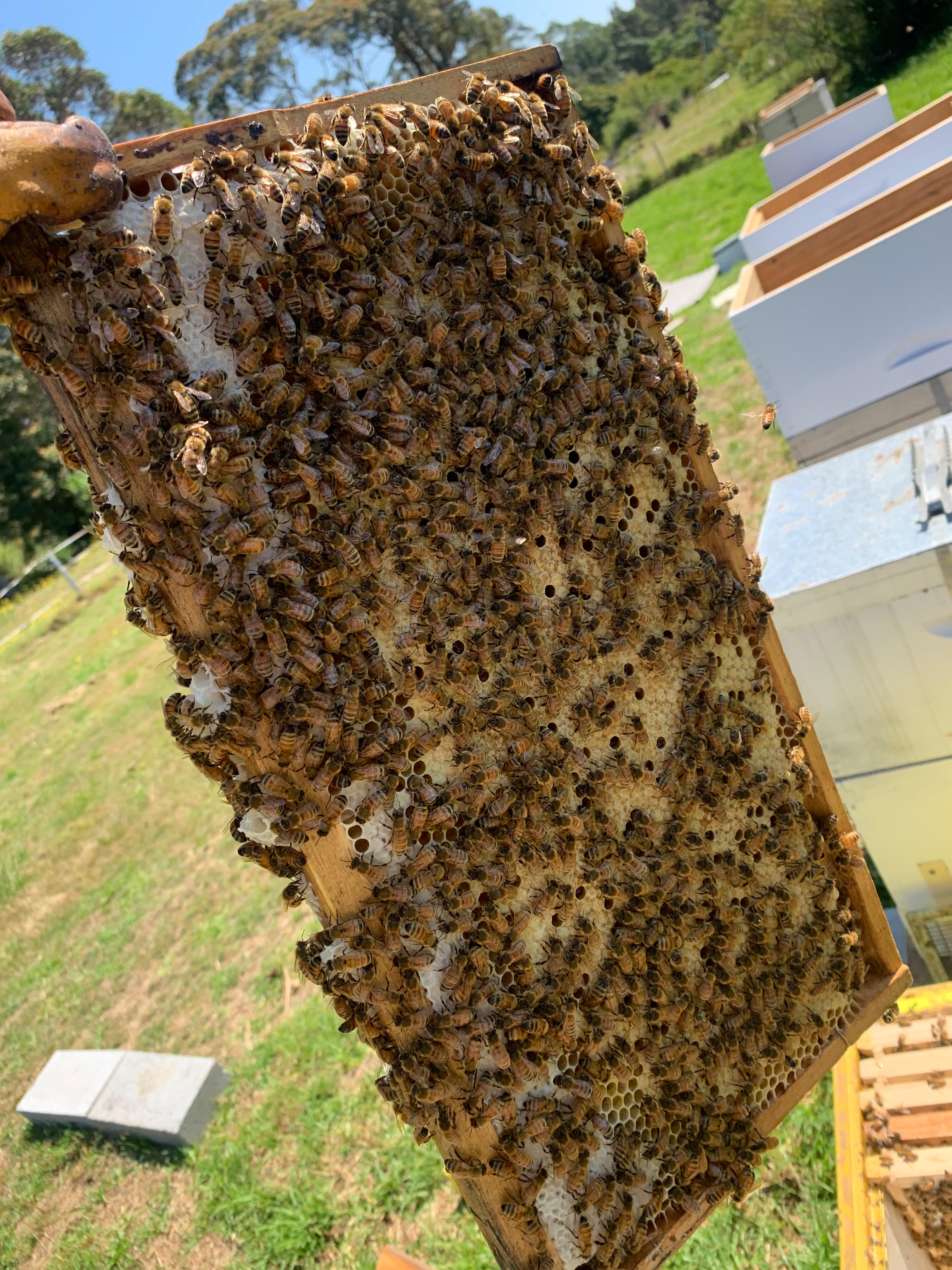
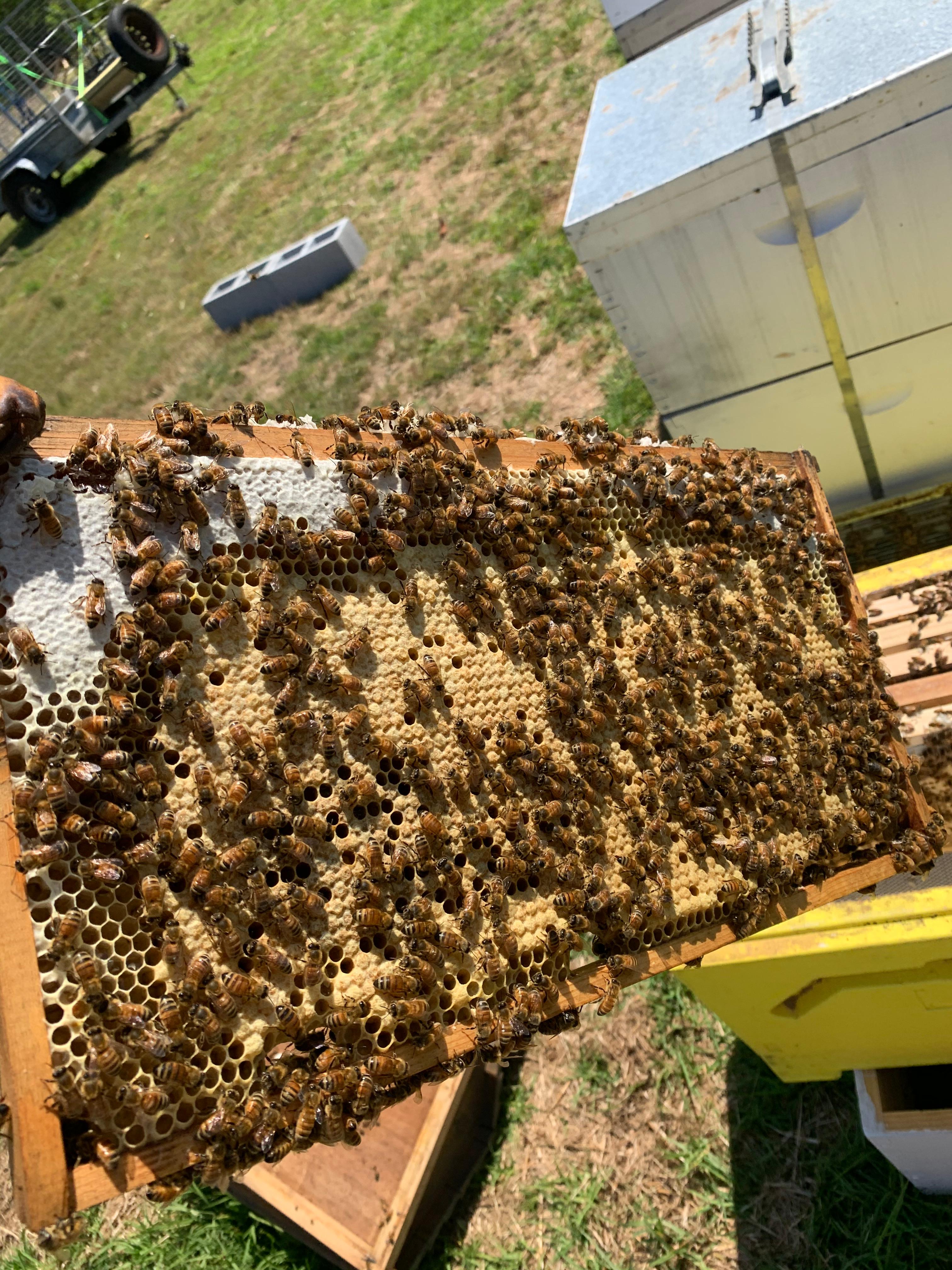
This is the step the videos skip. The bees you sample have to be nurse bees from the brood nest. Nurse bees are the bees that varroa prefers. Foragers, drones and the queen's retinue are the wrong sample.
- Open the hive, find the brood nest, pull a frame of open brood (uncapped larvae). Open brood is where the nurses are working.
- Confirm the queen is not on this frame before you do anything else. Twice. If you cannot find her, pick a different frame. Killing your own queen with a sugar shake is a memorable way to learn this lesson.
- Hold the frame over the open hive. If a bee shakes off, she lands on her sisters, not in the grass.
Scoop the sample
- Hold the measuring cup at the bottom edge of the frame.
- In one smooth motion, scrape upward along the surface of the frame, knocking bees into the cup. They will be confused for about two seconds. Use those seconds.
- Tip the cup into your jar. The 8-mesh lid goes on now.
If you took less than half a cup, do it again. Less than 200 bees and your sample size is not statistically useful. If you took a full cup, that is fine, just adjust the math at the end.
Add the sugar and shake
- Through the mesh lid, add two heaped tablespoons of icing sugar.
- Roll the jar gently for about a minute so every bee gets dusted. Then sit the jar in the shade for two minutes. The sugar disrupts the mites' ability to grip onto the bee. Two minutes of contact is the minimum.
- Now flip the jar over the white tray and shake firmly for 60 seconds. Yes, firmly. A timid shake leaves mites on the bees. The bees can take it.
Read the result
You will see a fine snow of icing sugar on the tray, and in it, dark reddish-brown pinheads. Those are varroa. Spritz the tray with water from the spray bottle. The sugar dissolves and the mites become much easier to see and count.
Write the number down. Then return the bees. Tip them out gently in front of the hive entrance, give the jar a tap, and they will walk in. They will groom each other clean within an hour.
Doing the math: mites per 100 bees
The number you care about is mites per 100 bees, not raw mites.
- 300 bees in your sample, 6 mites in the tray = 2 mites per 100 bees. Below threshold, but trending.
- 300 bees, 9 mites = 3 mites per 100 bees. Treatment threshold. Plan a treatment.
- 300 bees, 18 mites = 6 mites per 100 bees. You are not deciding whether to treat. You are deciding how soon you can.
If you sampled a different number of bees, scale: (mites / bees) x 100.
The 3-mite threshold is the figure DPI and AgVic both reference, and it is supported by the international literature. Some commercial operators in the United States now treat at 2 mites per 100 bees during the build-up months, on the argument that varroa multiplies inside capped brood and a 2-count today is a 4-count in three weeks. Reasonable people in Australia are starting to land in the same place.
Recording, because future you needs the trend
A single mite count tells you almost nothing. Three mite counts on the same hive over twelve weeks tells you the slope, and the slope is what you treat on.
For each test, log:
- The date.
- The hive ID.
- The method (sugar shake).
- The sample size (number of bees, even if it was always 300).
- The mite count.
- The mites-per-100-bees figure.
The 3-mite threshold is not the only number that matters. A hive that goes from 0 to 1 to 3 to 7 over four months has a problem long before the last reading. The earlier you spot the slope, the more treatment options you have, including the cheap and gentle ones like a brood break.
The honest caveat
Sugar shake is a screening tool. It will give you false negatives, especially when the mite population is mostly inside capped brood. If a sugar shake reads zero on a hive that looks weak, do an alcohol wash before you write off the warning. Bees you lose to an alcohol wash are 300 bees. A colony you lose to a missed varroa diagnosis is 50,000.
Build the habit now. The hives that come through the next five years are going to belong to the people who tested and recorded, every quarter, even when the result was zero.